



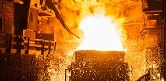















Fire Retardant and Antistatic Clothing
Fire retardant and anti-static clothing is designed to protect workers in environments of high thermal and electrical risk. It complies with standards such as EN ISO 11612 and EN 1149-5, guaranteeing fire resistance, dissipation of electrostatic charges and safety in ATEX areas.
Explore our catalogue and choose the protective clothing that best suits your sector:


Showing all 20 results
-

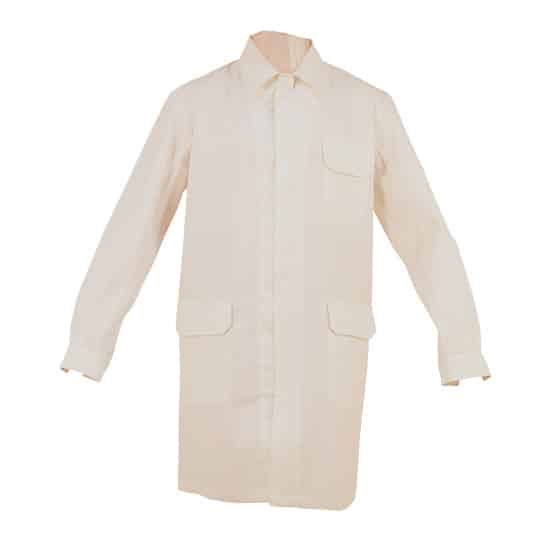
Closed fireproof and antistatic gown
-

Closed fireproof and antistatic jacket
-
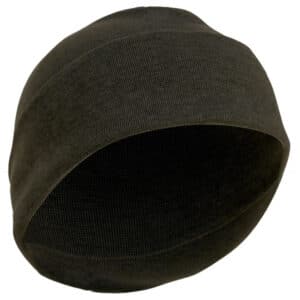
Double layer cap
-

Fire retardant and antistatic padded vest
-

Fire Retardant Hat
-

Fire retardant trousers
-
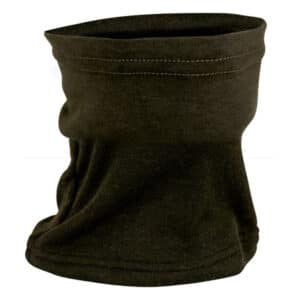
Fireproof and antistatic neck gaiter
-

Fireproof and antistatic padded jacket
-

Fireproof and antistatic T-shirt
-

Fireproof T-shirts
-

Flame retardant and anti-static sleeve polo shirt
-

Flame retardant and antistatic closed jacket
-

Flame retardant and antistatic closed trousers
-

Flame retardant, adjustable and velcro seat belt
-

Long double-layered executioner
-

Long Executioner
-

Long-sleeved flame retardant and antistatic polo shirt
-

Red Short Fireproof Executioner
-

Short double-layered executioner
-

Waterproof Fire Retardant Working Set
What is flame retardant and antistatic clothing and why is it essential?
Fire retardant and antistatic clothing is a type of clothing designed to minimize the risks of burns from exposure to fire and electrostatic discharge in industrial environments. It is made with special fabrics that prevent the spread of flames and dissipate the accumulation of static electricity, reducing the risk of ignition in ATEX (explosive atmospheres) areas.
Its use is essential in sectors where workers are exposed to high temperatures, sparks, electric arcs or flammable products, guaranteeing effective protection against possible accidents.
Key Standards in Fire Retardant and Antistatic Clothing
To ensure maximum safety in high-risk environments, flame retardant and antistatic clothing must comply with international regulations governing its manufacture and performance. These regulations set out requirements for flame resistance, electrostatic charge dissipation and thermal protection.
EN ISO 11612 Standard: Heat and flame protection
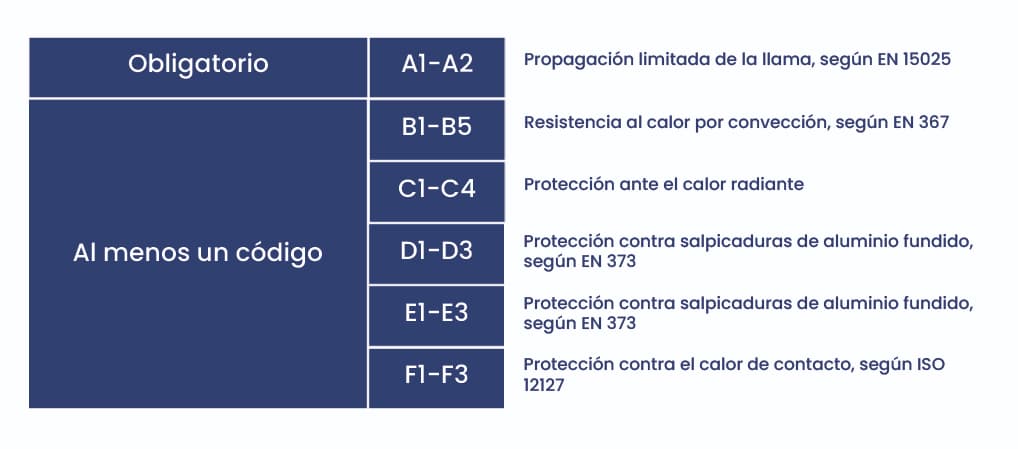
The EN ISO 11612 standard certifies that a garment offers protection against heat and flame under different exposure conditions. Garments that comply with these regulations must resist flame spread and provide thermal insulation against heat sources such as direct fire, radiant heat, or molten metal splashes.
Within this standard, garments are categorized according to their level of resistance to different types of heat:
EN 1149-5 Standard: Protection against static electricity
Static electricity is a hazard in environments where flammable gases or combustible dusts are present, as a simple spark can cause an explosion. The EN 1149-5 standard certifies that clothing is capable of dissipating electrostatic charges, preventing the accumulation of electricity in the fabric.
To comply with this standard, garments must incorporate conductive fabrics that facilitate the dissipation of electrostatic charge. This is achieved through the use of carbon fibers or treated materials with dissipative finishes that prevent the accumulation of electricity in the worker's body.
This standard does not protect against direct electric shocks, but prevents the build-up of electrostatic charges on clothing to reduce the risk of ignition in ATEX zones.
Differences between category II and category III
Depending on the level of risk and the protection offered, flame retardant and antistatic workwear is classified into two broad categories:
- Category II: Protection against intermediate risks, such as sporadic exposure to sparks, heat from contact or small controlled fires.
- Category III: Protection against serious and irreversible risks, such as direct contact with flames, environments with a risk of explosion or prolonged exposure to extreme heat.
Category III PPE requires mandatory certification by a notified body, while Category II PPE can be self-assessed by the manufacturer.
Sectors that require flame retardant and antistatic clothing
The use of flame retardant and antistatic clothing is mandatory in sectors where workers are exposed to high temperatures, fire, electrostatic discharges or flammable substances. Depending on the type of risk, specific protection is required.
Main sectors that require protective clothing
Chemical industry and refineries
Workers in chemical plants and refineries are exposed to flammable substances and volatile gases that can cause explosions or fires. Fireproof and antistatic clothing prevents the spread of flames and reduces the risk of electrostatic discharge.
Work in ATEX (explosive atmosphere) environments
ATEX environments include areas with the presence of combustible dusts, flammable vapours or explosive gases. Anti-static clothing prevents the build-up of electrical charge that could generate a spark and cause ignition.
Electrical and welding
Electricians and welders require protection from arc flash and high-temperature sparks. Clothing with EN ISO 11612 and EN 1149-5 certification is essential to minimize risks of electrocution or burns.
Firefighters and emergency services
Rescue and fire crews need garments with high thermal resistance and protection from direct flames and radiant heat. These garments must comply with advanced regulations to ensure their safety in extreme interventions.
Forestry industry and fire brigades
Personnel working in forest firefighting need lightweight, breathable fireproof clothing, which protects them from radiant heat and flames without compromising mobility.

Benefits of Fire Retardant and Antistatic Clothing
The use of flame-retardant and anti-static protective clothing is not only a requirement in high-risk sectors, but also brings key advantages for worker safety and well-being.
| Benefit | Description |
|---|---|
| Preventing burns and electric shocks | Minimizes the impact of fire, extreme heat, and static electricity, reducing the risk of serious injury. |
| Regulatory and legal compliance | Certified garments guarantee compliance with EN ISO 11612 and EN 1149-5 standards, which are mandatory in many industrial sectors. |
| Protection in ATEX environments | It prevents the build-up of electrostatic charge and reduces the risk of explosion in atmospheres with flammable gases or combustible dusts. |
| Comfort and ergonomics | Designed with breathable, lightweight and flexible fabrics, allowing mobility without compromising safety. |
| Durability and resistance | Made with high-quality materials to withstand extreme conditions and ensure a longer lifespan. |
Frequently asked questions about our unsightly and flame-retardant clothing
Fire retardant clothing is designed to resist the spread of flames and protect against extreme heat. Antistatic clothing, on the other hand, prevents the accumulation of static electricity, reducing the risk of sparks in explosive environments.
The use of fireproof and antistatic clothing is mandatory in sectors such as the chemical industry, refineries, electrical work, welding and ATEX areas, where there is a risk of fire, explosion or contact with flames.
It must comply with EN ISO 11612 for heat and flame protection, and EN 1149-5 for electrostatic charge dissipation in explosive environments.
It is recommended to wash it with neutral detergents, without softeners or bleach, at controlled temperatures. It is also important to avoid using industrial dryers to maintain their protective properties.
At Oroel we offer fireproof and antistatic clothing certified with current regulations. Explore our catalog and find the best option for your sector.